
AI automation in Glasgow: what it actually changes for a small firm.
For most Glasgow firms this has very little to do with clever technology. An enquiry came in at half two while you were under a sink in Dennistoun. It got its first reply at nine the next morning, by which point the customer had booked someone else. That gap is the thing worth fixing, and it is the thing this fixes.
Glasgow's small firms are field businesses
Look at who actually trades here. Trades and maintenance across the Southside and the East End. Salons, barbers and clinics down Shawlands and Byres Road. Hospitality and events through the Merchant City and Finnieston, alongside the small creative and production shops that grew out of the city's studio scene. Garages, joiners, cleaners, physios, dog groomers, wedding suppliers.
Almost none of them are desk businesses. The owner is on a job, in a chair, on a shout, on a shoot. The Scottish Government's own Businesses in Scotland figures put small firms at the overwhelming majority of private sector businesses in the country, and most of those are tiny, a handful of people and often just one. That decides the whole problem.
If the person who does the work is also the person who answers the phone, writes the quote, moves the booking and chases the invoice, then all of that admin only happens when the work stops. Evenings. Sunday. The van, parked outside a job, doing paperwork.
The enquiry that dies of silence
Ask any Glasgow owner where the money leaks and you will get the same answers in a different order. Enquiries that go quiet. Bookings that need three messages to pin down. Invoices sat unpaid for weeks.
The Federation of Small Businesses has spent years documenting the last one. Its research on late payment is blunt that unpaid invoices are a leading cause of small firms going under, and that owners lose real hours every week chasing money they have already earned. The first two leak just as much. They are quieter about it, that is all. Nobody sends you a letter to say they went with the other quote.

What changed this year, in plain terms
You will have heard that AI got cheaper and better. Both are true, and neither is the interesting part for you.
The interesting part is duller. The tools behind all this got much steadier at long, boring, repeated jobs, the kind that run for hours in the background rather than answering one question and stopping. That used to be the expensive, unreliable end of the technology, and now it is the ordinary end.
Translated into your week: an assistant that watches the inbox all afternoon, drafts a proper reply to every enquiry, nudges the two that went quiet on Tuesday and has a booking ready for you to confirm. That is no longer an ambitious idea. It is a normal one. We wrote about the shift in the AI that keeps working after you shut the laptop.
What has not changed: it still needs to know your business. A tool that does not know you do not cover Milngavie, that Saturdays are booked out, or that you never quote over the phone will write confident nonsense very quickly.
Where a Glasgow owner should start
Not with a strategy. Start with the two jobs that lose you work while you are busy.
First, the reply. Every enquiry gets a real answer within minutes: your prices, your area, your next free slot, in your words. Then the follow-up. Two days later, one polite nudge to anyone who has not come back. That single message recovers more work than most owners expect, and it is the one nobody ever gets round to sending.
After that: bookings that confirm themselves, and invoices that chase themselves. We ranked the wider list in 10 jobs to hand to automation first.
How the crew handles this
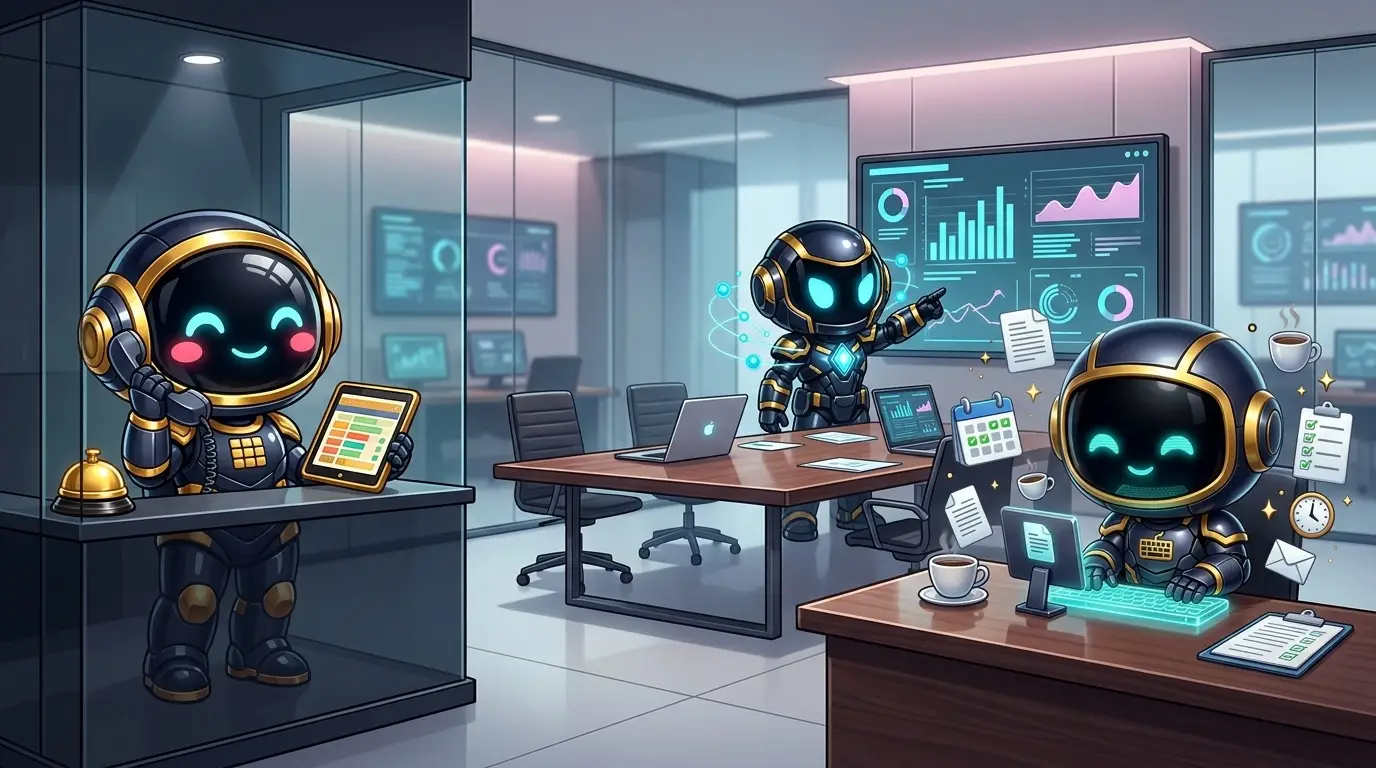
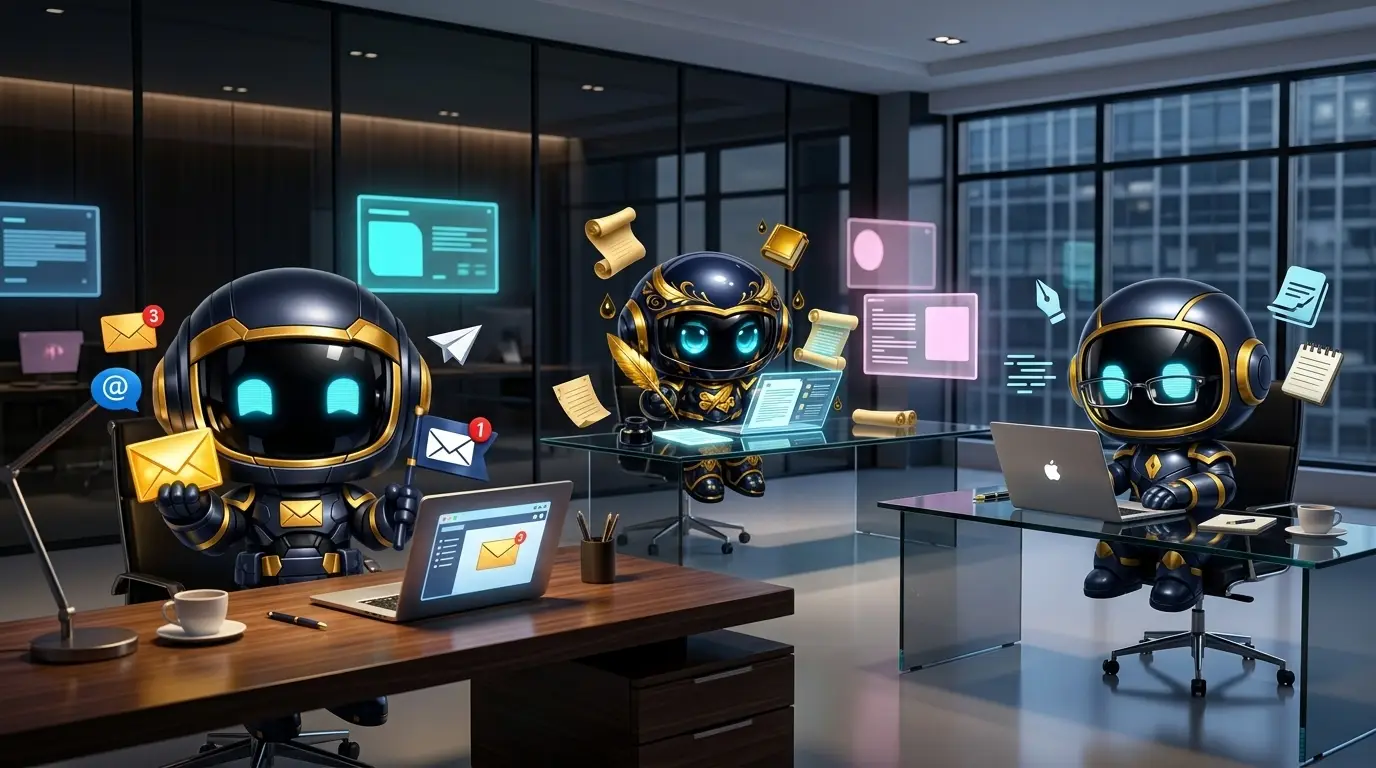
WorkMate OS is a crew of named AI teammates with jobs, rather than a box you type prompts into. One handles the inbox. One handles bookings. One handles accounts and chasing. One writes copy in your voice.
For the enquiry problem, the part that matters is the shared Brain. Every mate reads and writes the same memory. Tell the crew once that you do not cover the north of the city past Bishopbriggs, and the mate answering enquiries knows it, the mate taking bookings knows it, and the mate writing your ads knows it. Correct something and the correction sticks. Next week, next month, not just for the rest of that conversation.
Your brand kit sits in the same place. Voice, tone, the words you will not use. You set it once instead of re-explaining yourself at the top of every task, which is the main reason automated replies usually sound like nobody.
Anything going out to a customer is drafted, reviewed and sent with your approval. You are not handing your reputation to something that writes on your behalf unsupervised. The activity log shows what ran, when, and what it produced, so the honest answer to "what has it actually been doing" is a screen you can look at.
The honest version
You do not need to become technical, pick a model, or understand anything you have read in the news this month. There is nothing for you to install, connect or maintain. If you are the kind of Glasgow business where the work happens away from a desk, the whole point is that the desk work stops waiting for you to get back to it.
WorkMate OS Launch Access is now open. Start with the enquiry reply and the follow-up. If those two stop leaking, everything else is a bonus.