
AI automation in Sheffield and South Yorkshire: the job nobody wrote down.
It was a quiet week for AI news — a few tool bundles, a vendor packaging its product differently. None of it changes what's slowing down a joiner in Hillsborough or a salon in Ecclesall. The bottleneck is the one it always is: the owner is the only person who knows how the pieces fit together, and every new tool adds another piece.
What actually happened this week
Nothing dramatic. A guide collecting a batch of developer plugins went out. A document-processing vendor started offering its product through a different technical channel instead of just an API. A few people online showed AI tools driving other office software. Plumbing, and quiet plumbing at that. Most days last week produced nothing worth reporting.
Worth saying plainly, because the headline version of AI news makes every week sound urgent. This one wasn't. If you run a business in Sheffield, Rotherham, Barnsley or Doncaster and skipped the news entirely, you haven't missed anything that changes how you work today.
South Yorkshire runs on the same handful of trades
Look at who's actually trading here. Joiners and electricians working out of Hillsborough, Attercliffe and Chapeltown. Salons and clinics around Ecclesall Road and Crookes. Small engineering and precision firms carrying on Sheffield's steel tradition in units around Meadowhall and Templeborough. Two-person agencies and studios near the Cathedral Quarter. Independent shops on Barnsley's Market Hill and Doncaster's Frenchgate. Logistics and trade counters strung along the M1 and M18.
Government figures show the pattern clearly: the large majority of UK businesses employ nobody except the owner, via the business population estimates. South Yorkshire is no exception. These are businesses run from a van, a workshop, or a single till, not from an office with an admin team.
The real bottleneck: you're the one joining it all up
Nobody hires for this job, because it doesn't look like a job. It looks like normal running of a business.
Your booking diary knows the time slots but not the prices. Your invoicing software knows what's owed but not which customer always pays late but always pays. Your website lists your services but not that you stopped taking jobs past Penistone in the spring. All of that only exists together in your head. The only way it moves between tools is you moving it.
So you write the quote by hand, because you're the only one who knows what this particular job should cost. You handle the reschedule too, because nobody else knows Thursday is already tight. And you're the one who replies to the enquiry at nine at night, because if you don't, it goes quiet and the customer books somewhere else.
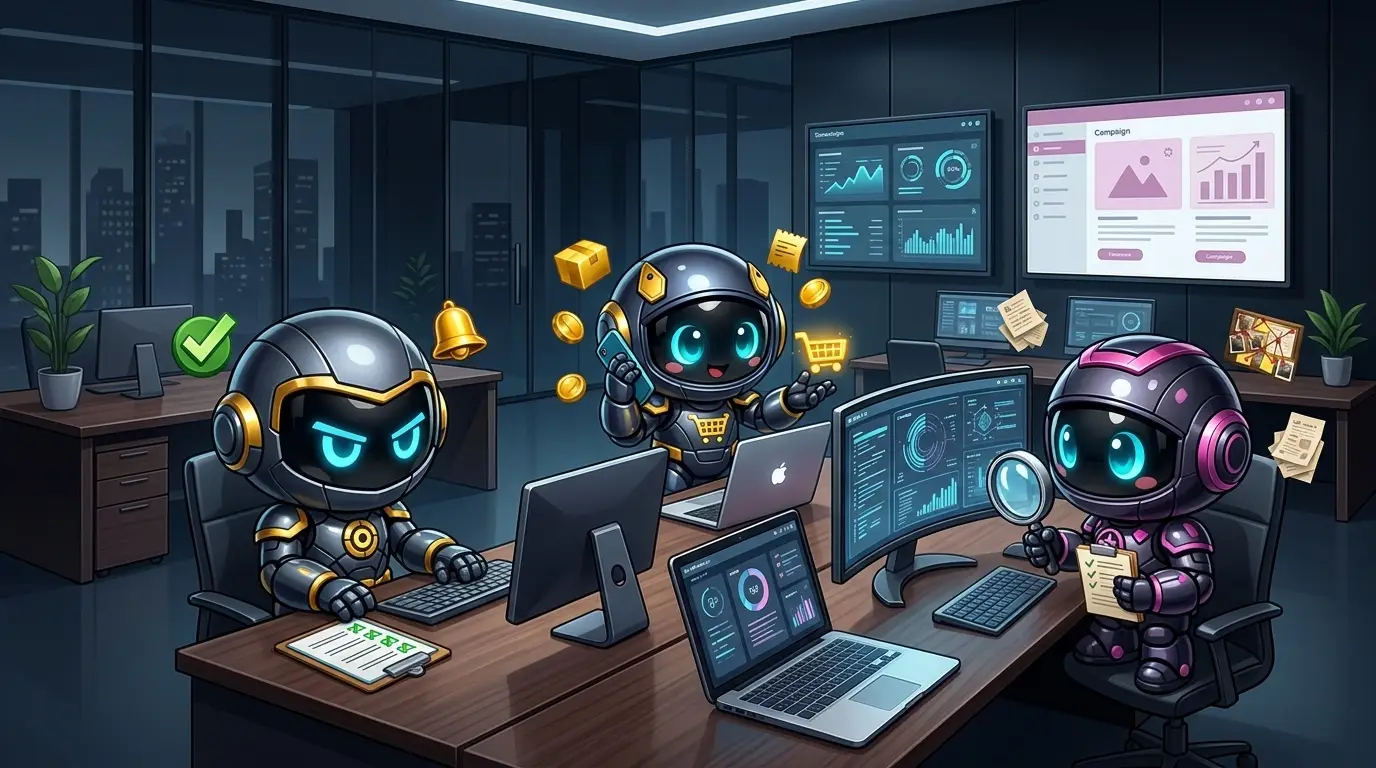
This is why bolting on another AI tool so often makes the week worse, not better. Every new tool is one more thing you have to brief, correct and check on. You haven't removed the job of joining things up. You've added a stop to it.
What actually changes, and what doesn't
What changes is the cost of getting a business properly set up once. If your rules — prices, coverage, hours, what you will and won't take on — live in one shared place, you explain your business properly a single time and stop re-explaining it to every tool and every new hire. A real saving, but one most owners never reach, because they give up mid-way through the explaining.
What doesn't change is the reason people stall in the first place. When Goldman Sachs asked small business owners across the US what was holding them back, the answers were time and know-how, not whether the technology was capable enough. Nobody's waiting on a cleverer model. They're waiting on an hour that doesn't exist.
It also doesn't change what customers will tolerate. A widely discussed 2026 industry report found that around six in ten US consumers treat the word "AI" in a brand's messaging as a turn-off. Sounding like nobody in particular costs you more than sounding slow would. We covered that in why AI output feels generic.

Where WorkMate OS sits on this
You might assume the fix is to go and build a shared set of business rules yourself, in a spreadsheet or a notebook. You don't have to. That's not a feature you switch on in WorkMate OS. It's what the product is.
WorkMate OS is a crew of AI teammates for jobs, not a box you type prompts into. One mate handles the inbox. One handles bookings. One chases money that's overdue. One writes in your voice. Every one of them reads and writes to the same shared Brain.
So you tell it once that you don't take call-outs past six, or that anything over five hundred pounds needs a deposit, or that you've stopped covering north of Penistone. The mate answering enquiries knows it. So does the one moving bookings. So does the one writing your posts. Correct something and the correction sticks next week and next month, not just for the rest of that conversation — the point we made in one shared Brain, never off the clock.
Your brand kit lives in the same place: your voice, your tone, the words you won't use. Set once, not re-explained on top of every task. Anything going out to a customer is drafted, reviewed and sent on your approval, so the awkward ones land with you rather than getting answered on your behalf. And there's an activity log, so the honest answer to "what has it been doing all afternoon" is a screen you can actually look at.

Where to start this week
Do the part that has nothing to do with software first.
Write down the ten things you currently repeat to people. How prices vary. The area you cover, and where you stop. Hours, and the days you don't work. Deposit rules. The jobs you turn down. How you want the first reply to sound. What happens when someone goes quiet.
That list is the whole exercise. It's the thing you've been carrying between tools by hand. Once it's written down, handing it over takes an afternoon, and it stops needing to be handed over again.
If you want the wider version before you start, the plain-English UK guide covers the same ground without the local detail.
The honest version
You don't need to understand what was actually announced this week. The useful part of it reaches you as a smaller version of a problem you already have: you're the only place your business is written down, and everything routes back through you because of it.
Fix that and the rest gets easier. Skip it, and no amount of clever software helps. You'll still be the one carrying the facts around.
WorkMate OS Launch Access is now open. Start with the ten facts. You can write them on the back of an invoice.