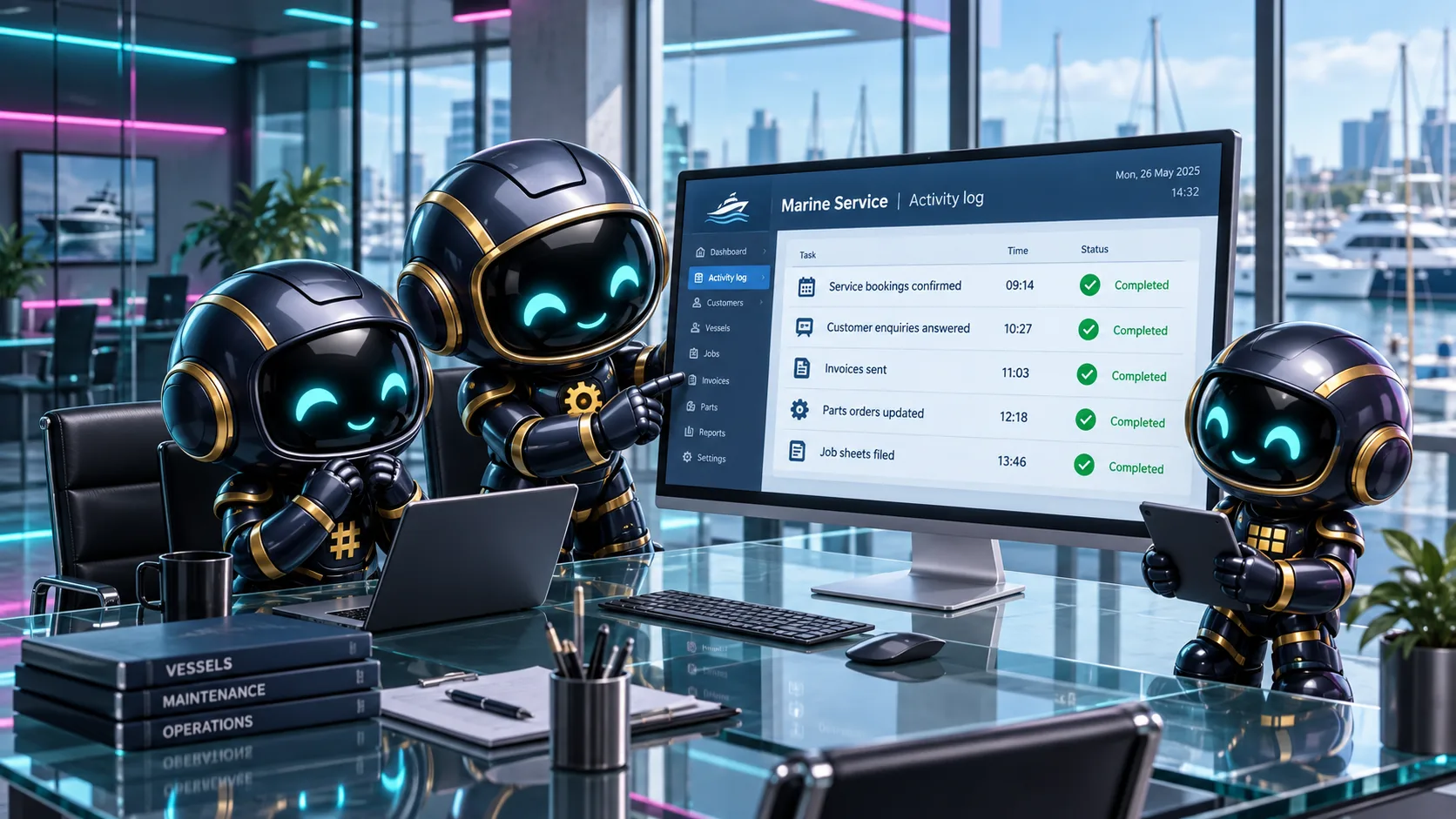
The boat left Sutton Harbour. The paperwork stayed behind.
A Plymouth marine firm can finish the work on time and still spend the evening moving the job through its inbox, calendar, notes and invoice.
The job is finished. The admin is not.
Take a small marine engineering firm around Sutton Harbour or Millbay. The repair is complete. The customer collects the boat. One person gets back to the tools.
Then the unfinished bits turn up. Find the original enquiry. Check what was agreed. Add the next inspection date. Write the update. Raise the invoice. Chase it later if the payment does not arrive.
Each task is manageable. Together, they make a second shift.
Trades, holiday businesses and small professional firms across Plymouth and Devon run into the same problem. The owner becomes the link between tools that do not remember the same things.
What this week's AI news says
Anthropic released Claude Opus 5.5 on 22 September and says it can handle demanding multi-step work at a lower operating cost than its previous Opus model. That is a vendor claim, not independent proof. You can read the announcement from Anthropic.
For an owner, the useful change is straightforward. AI tools are getting better at carrying work through a sequence instead of returning one isolated answer.
That only helps when the sequence exists in the business. An enquiry becomes a booking. A job note becomes an invoice. A payment reminder waits for owner review. Better AI will not connect those steps on its own.
The difficult part is keeping the instructions, business facts and permissions together while the work moves along.

How WorkMate handles the handover
WorkMate OS gives you named mates for jobs such as inbox, bookings, accounts and sales. They read and write the same shared Brain, so a customer detail or correction does not stay in one conversation.
For the marine firm, the enquiry, job context, follow-up and payment work can sit with one connected crew. Your voice, tone and banned words are stored too. The customer update sounds like your business, rather than a random template.
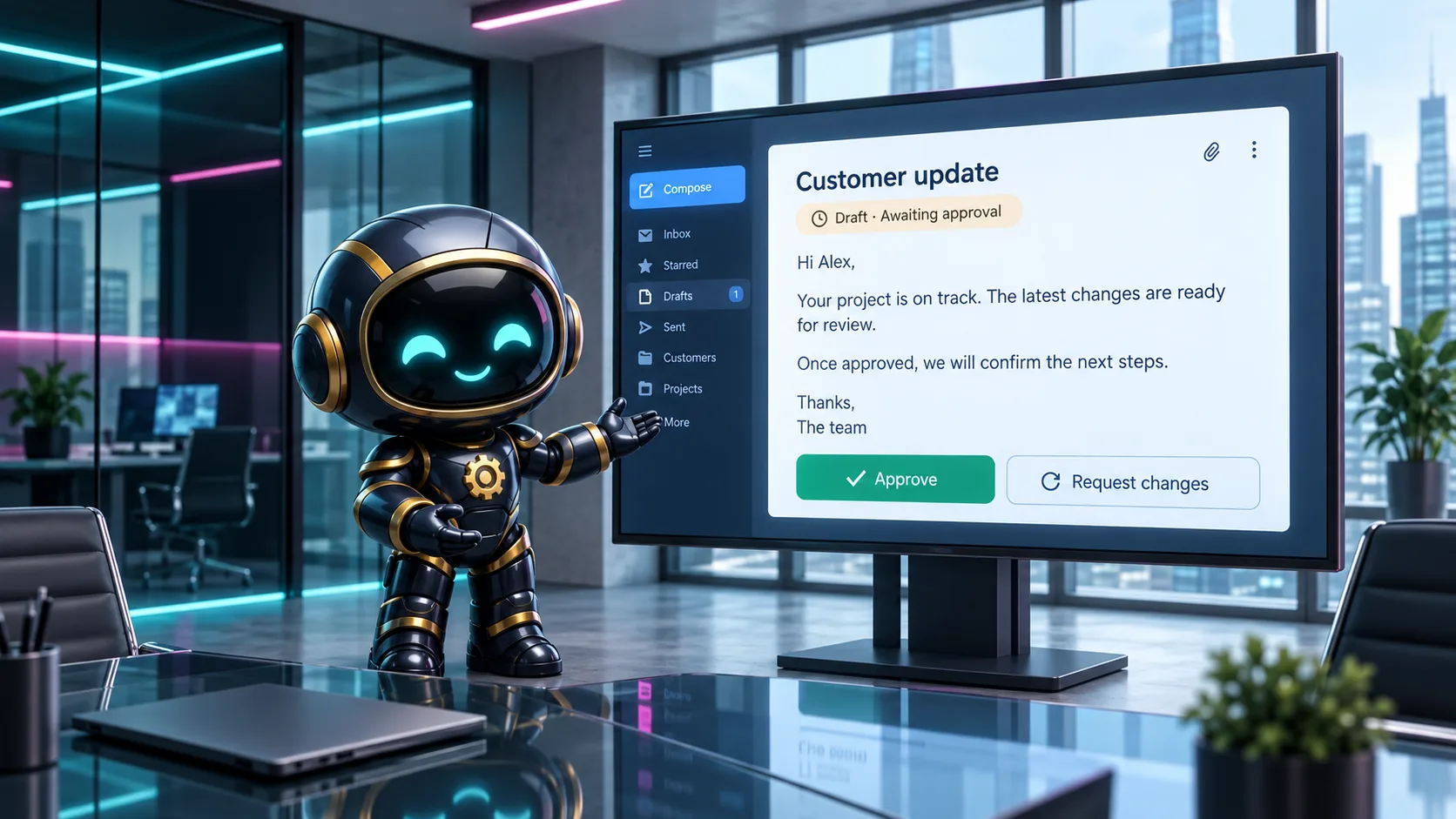
You still control anything that goes out. A message or payment reminder follows draft, review, send. WorkMate removes the chasing and joining-up while leaving the judgement with you.
Do you need to do anything about this release?
No new task is needed. A better model does not change much for you when the useful capability is already inside the product.
Look at the last job that finished in your business. What stayed open afterwards? The invoice. The follow-up. The calendar note. The customer update.
That is the bottleneck to fix. The model name can wait.
If you want the longer version of why connected work matters, read The AI trial worked. Your business still had to join the dots. For the approval boundary, see Who is allowed to press send?