
The boiler booking that never made it onto the calendar.
A booking form is not a booking. For a plumber or heating engineer, the useful system turns a customer's request into an appointment while you are still under the floorboards.
The call comes while you are working
You are halfway through a boiler repair when your phone rings. The customer wants a visit next Tuesday, preferably in the morning. You cannot answer safely. They leave a message, fill in a form or try the next engineer on Google.
Later, you listen back and check your diary. You text for the address, then the next job starts before you confirm anything.
The enquiry arrived. Nobody owned the steps after it.
Research involving 500 UK plumbers and heating installers found they spent up to 30 hours per week on non-billable work, including sourcing parts, preparing estimates, customer liaison and account management, according to Highbourne Group and City Plumbing.

Why a missed booking matters
A phone is a poor front desk when you are carrying tools, driving between jobs or standing beside a customer's boiler.
In a survey of more than 220 UK tradespeople, 60% said they struggled to answer calls while working, and 34% believed they had lost work because of it, according to Fix Radio.
A separate 2026 UK outbound call study found that people answered 42.1% of calls to plumber numbers, 43.1% of calls to heating or boiler businesses and 41.2% of calls to gas engineers, according to Praxum.
The customer reaches out. You are busy. The booking waits for a quiet moment that never arrives.
What a real booking system does
A useful booking mate does more than send an email saying someone is interested.
It handles the first exchange, asks for the details you need, checks the available options and creates a clear appointment for review. The work is complete when the booking is visible and the customer knows what happens next.
That matters when skilled people are hard to find. In the SNIPEF Q2 2026 survey, 65% of UK plumbing and heating firms reported low availability of skilled professionals, while only 19% expected to increase staffing and 14% expected to recruit an apprentice. SNIPEF published the survey figures.
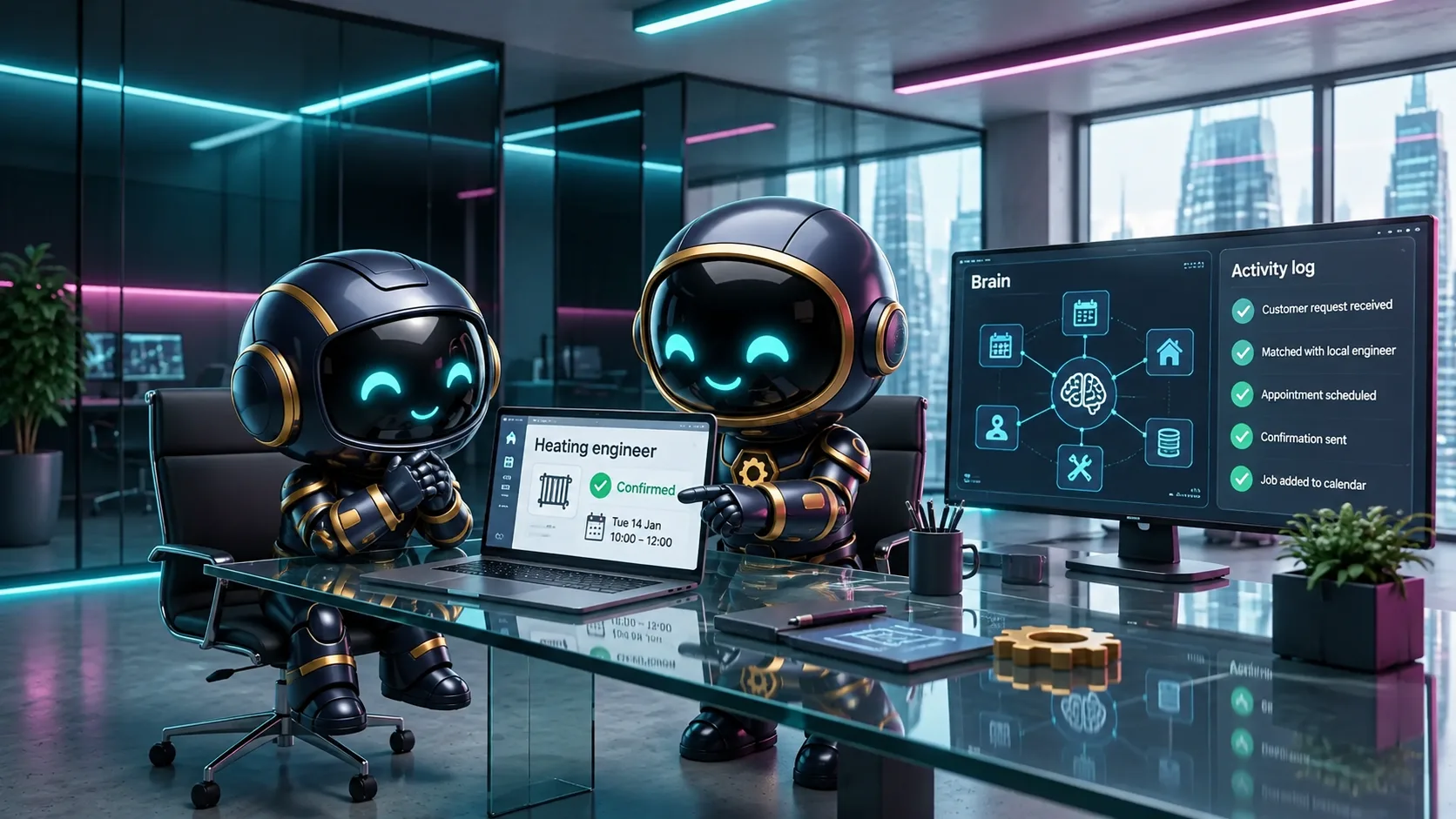
Where WorkMate OS fits
WorkMate OS has a booking mate for this job. It is built around booking work, rather than leaving you with another pile of enquiries to process later.
The booking mate works with the rest of the crew. The shared Brain remembers your service area, working hours, booking rules and the details you have corrected before. The brand kit keeps replies in the business's own voice.
Outward-facing work follows draft, review and send. You approve the important action. The activity log shows what ran, when it ran and what it produced. If a customer asks for a time you cannot offer, the record keeps that decision visible.
The honest answer
You do not need to react to every AI booking announcement. The useful test is closer to home.
When a customer asks for a boiler service while you are on a job, does that request become a real appointment, or another task waiting for you tonight?
If it still comes back to your desk, the business is doing the joining-up. A booking system should remove that handover, keep you in control and leave a record you can trust.