
The call that arrives while the dentist is with a patient.
A missed dental call can cost more than a few minutes. The caller may decide nobody is available and ring the next practice instead. Meanwhile, the dentist is with a patient, the receptionist is checking someone in or taking a payment, and the phone keeps ringing until it stops.
The phone is part of the service
The phone is often the first point of contact with a practice.
NHS England found that only 75.3% of people who tried to get an NHS dental appointment in England succeeded in 2022. For people contacting a practice they had not used before, the success rate was 31.5%. These figures do not prove that every missed call becomes a lost patient. They do show why silence on the line can be part of the access problem.
Staffing adds pressure. The General Dental Council found in its 2024 working-patterns survey that 94% of dental care professionals worked fewer than 40 hours a week, while 45% worked 30 hours or less. Covering the phone all day is difficult when the rota is part-time.

What handling it by hand costs
Someone has to stop, answer, find the patient record, understand the request and decide what happens next. When nobody can do that, the call becomes a voicemail or a note on a scrap of paper.
Then the second queue starts. The team calls back between patients. The patient misses the call. A cancellation remains open. A new enquiry waits until the end of the day.
Bad weather makes this worse. In a UK survey of dental practices during severe weather, Dentistry reported that 75% of practices with increased missed appointments said their fail-to-attend rate was between 9% and 40%, with some reporting higher rates. A call that confirms, moves or fills an appointment helps protect the diary.
What changes when a voice mate handles the first minute
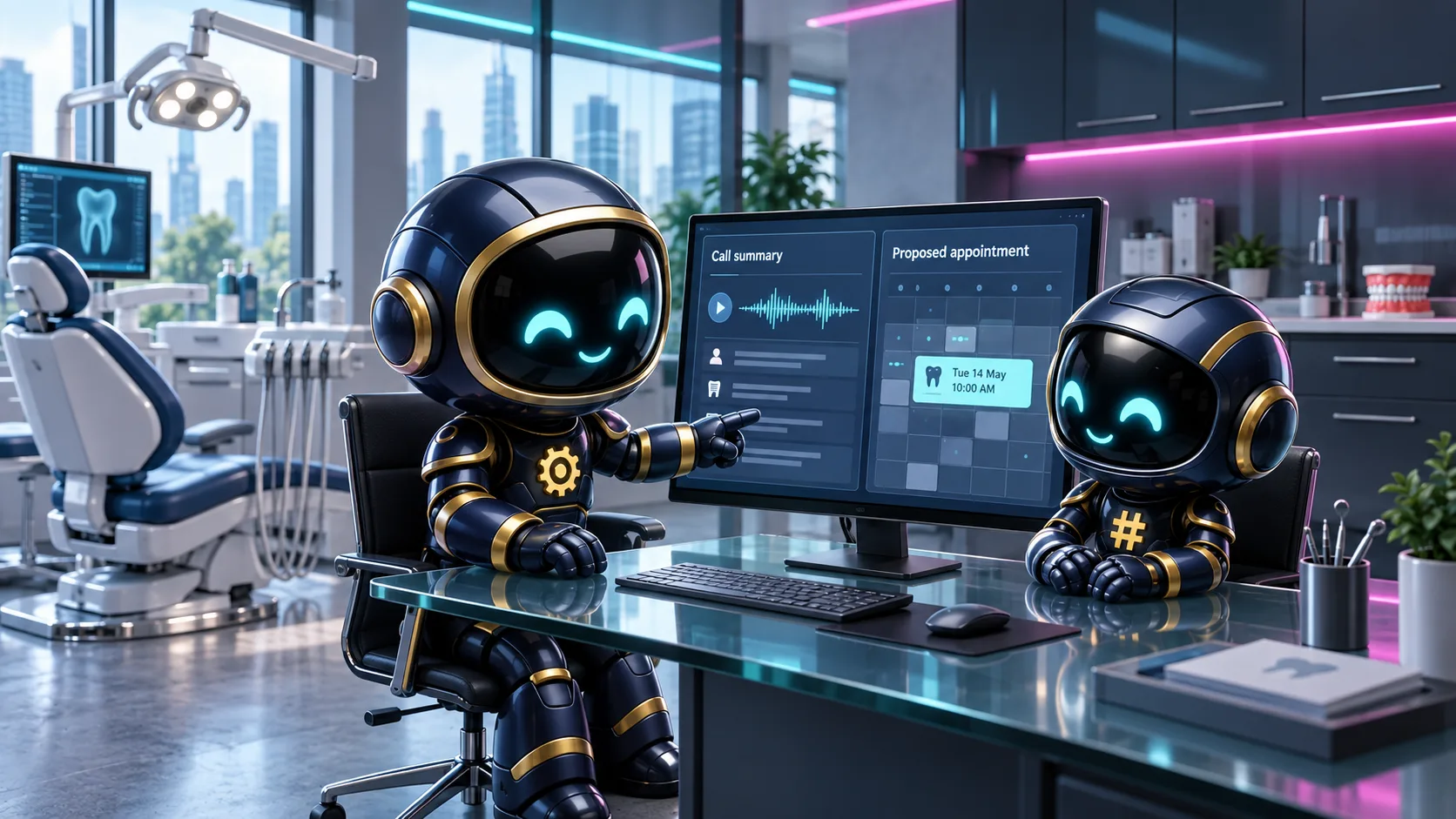
A voice mate answers the practice number while the team is with patients. It asks why the caller is ringing, captures the details and follows the practice's approved information. Where the rules are clear, it can handle routine booking work. Where a person needs to decide, it prepares the next step.
The receptionist comes back to a short list rather than a wall of missed calls. New patient enquiry. Cancellation request. Reschedule. Prescription question. Urgent concern. Each call has a record of what was said and what needs doing.
The BDA found that 78% of practice owners reported recruitment and retention as a source of stress. A voice mate does not solve staffing. It takes one repetitive pressure away from the people already there, leaving them more time for patients and decisions that need them.
Where the line must stay
A voice mate should not guess about clinical symptoms, promise treatment or invent availability. It should also avoid making a difficult caller feel passed around.
It needs the practice's actual rules: what counts as urgent, which information is approved, when a call goes straight to the team, and what the practice can promise. Those facts should be stored once, not retyped every morning.
This is where a named crew matters. The voice mate shares one Brain with the inbox, bookings and accounts mates. A correction made once is known by all of them. The brand kit stores the practice's tone and banned words. The activity log shows what ran, when, and what it produced.
Outward-facing work follows draft, review, send. The voice mate keeps the call moving. The owner controls the sensitive answer.
What WorkMate OS already does about this
You do not need to do anything about the AI phone news itself. The voice module is built for this job. It answers a real phone number while you are with a patient, captures useful details and passes the work into the same crew that handles bookings and follow-up.
If the request is routine, the booking mate can take it forward. If it is unclear or sensitive, it stops with the right information in front of you. That is the difference between answering the phone and replacing clinical judgement.
Look at your last busy afternoon. How many calls needed a dentist? How many only needed someone to answer, record the details and offer the next step? The second group is where a voice mate earns its place.