
The leaflet was due Friday. The brand was still in three files.
It is Friday morning. A leaflet is needed for a local business event, along with a quote for a new client and a social card for the same service. The words are ready. The design is scattered across three files. One has the old logo, another has the wrong blue, and the third sounds like a different firm.
That is the design bottleneck in a small accountancy practice. Ideas are rarely the problem. The time goes on making everyday work look as though it came from the same firm.
The work looks small. The interruption is not.
You open the old quote, then the Canva folder, then the email with the latest logo. You check which wording was approved. Three social graphics from last year appear, and you have to work out which one is safe to copy.
The accountancy work waits.
This is not a rare problem. Sage's survey found that accountants spent only 44% of their working week on core accounting and compliance. It also found that 62% said they spend too much time managing the practice.
Design is part of that management tax. It arrives as a quick favour, then takes the quiet part of the day.
AI made the first draft easier. It did not make the firm consistent.
New design tools can produce a decent image quickly. That helps, but it leaves the harder question open.
A practice needs its quote, leaflet and social card to feel as though one firm made them. The tone has to fit. Words you never use need to stay out. The call to action has to suit the service.
An AI can make a picture. The useful test is whether that picture can leave the desk without creating another checking job.
What changes when a mate handles it
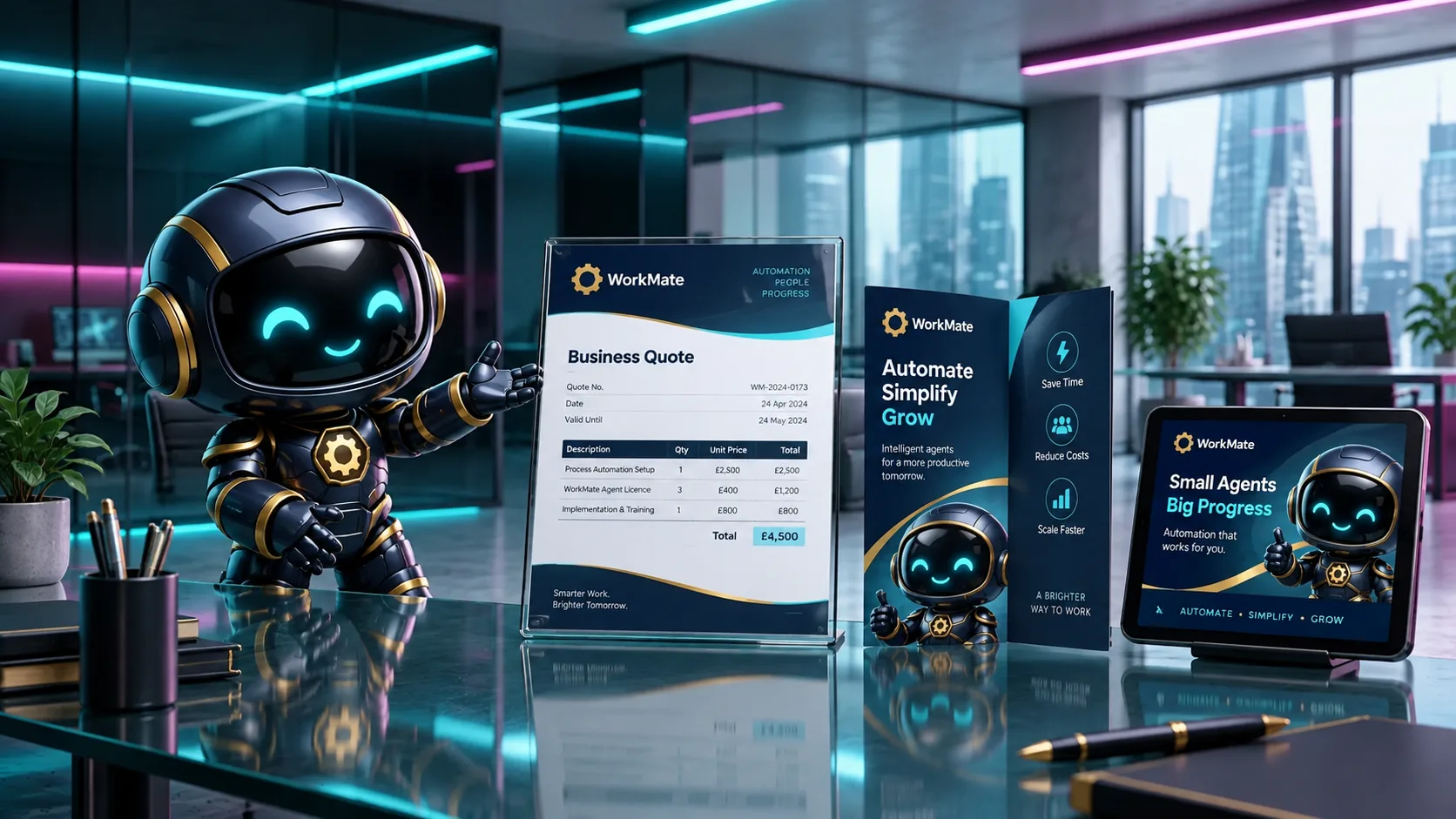
WorkMate has a Design mate for this job. Give it the brief: a leaflet for a local event, a quote for a new service, or a social card explaining a tax deadline.
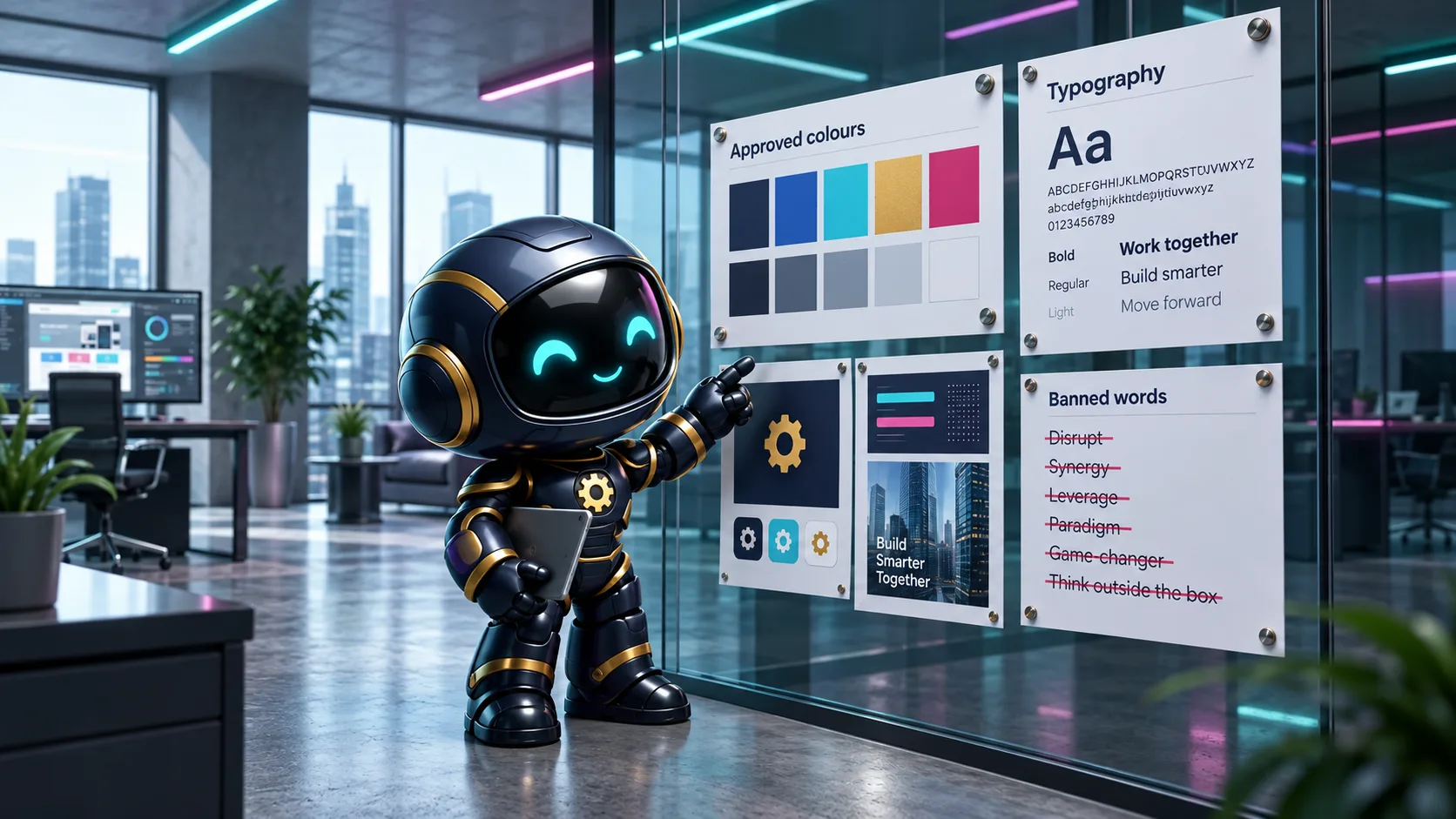
The mate reads the same shared Brain as the rest of the crew. Your brand kit is stored there too. Voice, tone, approved details and banned words do not need to be retyped for every task. Correct the wording once and that correction stays in place between sessions.
The work starts with the firm's actual rules. The quote can match the leaflet, and the social card can match both. You are not joining three disconnected tools together by hand.
You still approve the thing customers see
The Design mate does not publish whatever it wants. Outward-facing work follows draft, review, then send. You approve the final version.
The activity log shows what ran, when it ran and what it produced. If the wording feels too grand, or the image looks wrong for a serious accountancy practice, you change it before a client sees it.
The crew handles the repeated design work. You keep the judgement.
Design is often outsourced. Legal Futures reports that accountancy firms outsourced design work in 58% of cases. For a small practice, that can mean another email chain, another brief and another wait for a minor change.
The useful first draft should already know who you are.

What to hand over first
Start with the design job you keep postponing. The monthly social card. The service leaflet. The quote template that still carries last year's wording.
Give the crew the real rules once. How the firm sounds, which colours and logos are current, which claims need checking and which words are banned. Then let the Design mate prepare the next version when the job appears.
You do not need a new design subscription because the news says AI images are improving. If the bottleneck is keeping everyday work on-brand, that capability is already inside the crew you would be buying.