
The plumbing behind AI tools just changed. Nothing on your side moves.
If you heard that the standard connecting AI to everything else was torn up last week, the honest answer is that this is a plumbing story, and you are not the plumber. Nothing you use stops working. Nothing needs updating by you. It is still worth two minutes of your time, because underneath it sits the one question that decides whether AI saves you hours or quietly becomes another thing you look after.
What actually happened
There is a common language that AI software uses to talk to other software — your calendar, your invoicing, your inbox. Last week the people who look after that language published a rewrite of it. A big one. Its own lead maintainer told VentureBeat it is "probably the biggest change we've ever made".
Two things follow from that, and only one of them should ever reach your desk.
The dull one: everything carries on. The old way keeps working, with a stated minimum of twelve months before anything gets switched off. Nobody's booking form broke on Tuesday.
The other one is more interesting. Somebody went and tested how ready the world actually was, and of more than four thousand working connections he could reach, exactly one was ready for the new version (Hacker News, July 2026). He was fair about it. The new version was days old, so of course almost nothing had moved yet. What the number really shows you is the shape of the year ahead: thousands of connections that somebody, somewhere, now has to go and update. Whether that somebody is you is the whole story.
The bottleneck underneath
Most small businesses do not have an AI problem. They have a joining-things-up problem. The booking system does not tell the invoicing. The invoicing does not tell the inbox. An enquiry lands on Facebook and never reaches the diary, so the owner walks the information from one place to the next by hand, all week. You are the integration layer.
Connectors were supposed to take that job off you. What usually happens is a swap. Instead of copying between six tools, you now own six connections that can break, expire, need reauthorising, or fall behind a standard you have never heard of. That is the same work with worse hours. We wrote about the wider version of this in twelve helpers, or one good hire?

The other headline: things you plug in are not safe by default
Running alongside the plumbing story is a louder one. Add-ons, which are small packets of instructions that teach an AI a new job, have become something you can download from directories, and vendors are starting to ship their own. Convenient. Also, at the moment, a mess.
When one security firm scanned nearly four thousand published add-ons in February 2026, 36.8 per cent carried at least one security flaw and 13.4 per cent a critical one. It also documented a coordinated campaign: a single account publishing more than forty near-identical malicious ones. Some carried hidden commands to read private keys and send them elsewhere. Others simply told the AI to switch its own safety checks off. A separate study of a much larger pool found hidden hostile instructions in 26.1 per cent of them (Towards Data Science, July 2026).
That is worse than a dodgy app on your phone, for one simple reason. An add-on is not data the AI looks at. It is instructions the AI follows. So whatever your AI can reach, your inbox, your customer list, your bank details, an instruction smuggled into an add-on can reach as well. In one demonstration, a hostile instruction hidden in a public web page walked an assistant into a private project and had it publish what it found there.
Which is why the correct number of add-ons for a plumber or a salon to install personally, on a hunch, from a list, is none.
What the crew does about it
Nothing you have to do, which is rather the point: there is no connector for you to install, update, reauthorise or replace when a standard moves.
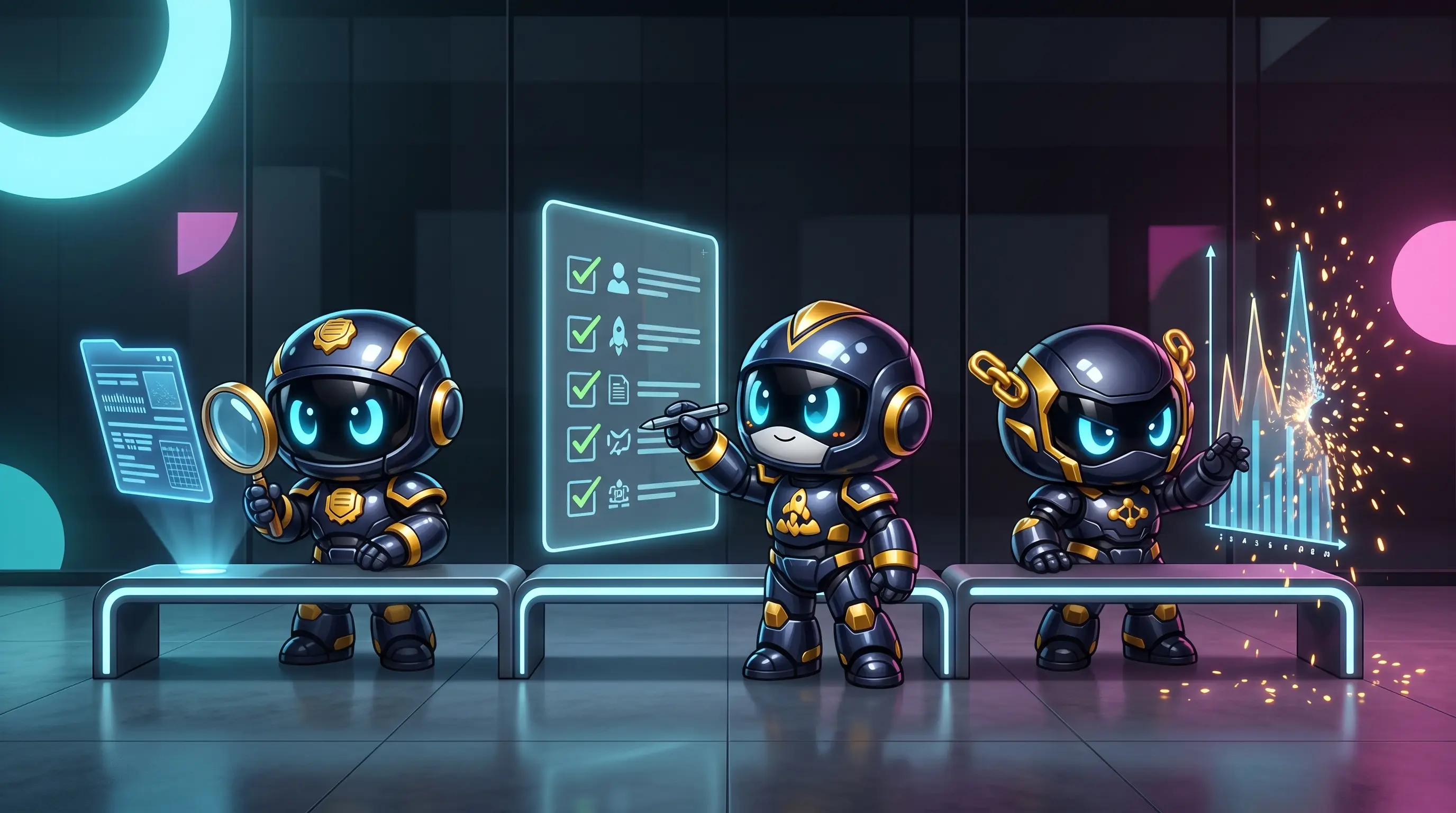
The crew arrives with its jobs already wired in. The inbox mate reads the inbox, the accounts mate chases the invoice, the bookings mate holds the diary, because those are jobs rather than plug-ins you assemble yourself. When the plumbing underneath changes, that is our maintenance. It does not appear in your week. Nothing gets added to your crew by you clicking install from a directory.
Two other rails matter more than usual here. Everything the crew knows about your business lives in one shared Brain, so a change under the bonnet does not wipe what you have told them. That is covered in One Brain, never off the clock. And anything heading out to a customer goes draft, review, send, with you approving it. If something odd ever came in through a pipe, it stops at your desk rather than in a customer's inbox. The activity log shows what ran and what it produced.

What to do with this
Nothing this quarter. Genuinely. But if anyone is selling you AI on the strength of how many things it connects to, that is now the wrong boast, and last week is the proof.
Ask about maintenance instead. When the standard underneath moves again, who does the work, you or them? If a connection goes stale on a Friday, do you find out from a log or from a customer? Can anything be added to your setup without a human deciding it is safe first? A supplier who answers those well is selling you the upkeep, which was always the part worth paying for. To run that test properly before you pay anyone, we set it out in how to test an AI team before you pay.